

BASTROP, TX – (March 26, 2026) – Bastrop Convention & Exhibit Center and The Boring Bodega
On March 26, YTexas brought together mayors, county commissioners, data center executives, film producers, airport leaders, and regional economic developers at the Bastrop Convention and Exhibit Center for our 2026 Regional Event.
——————
The theme was Building a Stronger, More Connected Texas, and what unfolded throughout the day was exactly that. Honest conversations, unexpected connections, and a shared sense that this region is at a genuinely historic inflection point.
Here is a look at what was discussed, who was in the room, and why this event stood out as the strongest regional gathering we have hosted to date.
Opening Keynote: The Mayors of Bastrop County
The day opened with a fireside conversation moderated by Becki Womble, CEO of the Bastrop Chamber of Commerce, featuring three mayors who represent the cities at the heart of Bastrop County. Mayor Ishmael Harris of Bastrop, Mayor Theresa McShan of Elgin, and Mayor Sharon Foerster of Smithville each spoke about what makes their communities unique, how they collaborate across city lines, and what they want business and civic leaders to understand about this region.
What struck the room was not just the substance of their answers, but the ease and warmth of their relationship. These three mayors clearly know each other, trust each other, and govern with each other in mind. Mayor McShan of Elgin described the collaboration simply: when push comes to shove, we are all joined together as one.
Mayor Harris, a fifth-generation Bastrop native, offered a vision that set the tone for the entire day. He spoke about wanting to set the city up for the next hundred years, to make Bastrop self-sustaining and prosperous for generations who have not been born yet. It was the kind of perspective that reminded everyone in the room that the decisions being made right now in this county carry real weight.
Mayor Foerster of Smithville, the smallest of the three cities, made the case clearly for why Smithville belongs at the table. With a regional airport, a growing workforce training center, and a deep commitment to keeping the cost of doing business low, Smithville is actively positioning itself for the next wave of growth.
Sylvia Carrillo Trevino, City Manager of Bastrop, opened the event with welcome remarks and offered her own framing of how Bastrop is managing growth without losing its identity. She described the city as being on the cusp of some spectacular strides, from water technology to new parks to infrastructure investments that will open up development across the county.
Breakout Session: Regionalism and a Dynamic Growth Corridor
The first breakout session brought together economic developers and infrastructure leaders to unpack what regionalism actually looks like when it is operational rather than aspirational. Moderated by Tracye McDaniel, President of TIP Strategies, the panel included Kyle Cavell from Austin Bergstrom International Airport, Giselle Myers from Opportunity Austin, Kaley Frye from the Elgin Economic Development Corporation, and Robert Andrade from the City of Smithville.
Kyle Cavell reframed how to think about the airport. Austin Bergstrom, now the third largest airport in Texas, is not just a place where planes land. It is infrastructure that drives economic growth for the entire Central Texas region. With a $5 billion expansion underway that will double gate capacity and triple square footage, the airport is preparing for the continued surge in demand from a region that has grown far beyond Austin’s city limits.
Giselle Myers of Opportunity Austin spoke about the challenge and the opportunity of telling one strong regional story while honoring the distinct identity of each community within it. The Austin MSA has been ranked one of the best places to live by the Milken Institute for nineteen consecutive years, and that ranking reflects the entire five-county region, not just the city of Austin.
Kelly Frye from Elgin spoke candidly about what it takes for a smaller community to show up as a full regional partner. It starts with showing up, she said. If you are not in front of people, if you are not going to the Opportunity Austin events, you are not meeting with the airport or with other communities, they simply do not think of you.
The panel’s consensus was clear: the region’s competitive edge comes from how well its communities work together. Transportation coordination, workforce pipelines, and air connectivity are all areas where deeper collaboration is both needed and possible.
Breakout Session: Made in Texas: Industry, Education and Workforce Development
In the breakout room, the conversation turned to one of the most urgent questions facing rapidly growing regions: how do you build a workforce fast enough to keep up with the opportunities being created? The roundtable brought together educators, economic developers, and industry representatives to discuss what is working and what still needs to be built.
A recurring theme was the gap between the skills employers need and the programs currently available locally. Community colleges, including Dallas College and Austin Community College, spoke about the active partnerships they are building with major companies to identify exactly where those gaps are and design both credit and noncredit programs to fill them. The focus is not just on traditional academic pathways but on giving students and workers the fastest, most practical route to a job that pays well and exists close to home.
There was also an honest conversation about transportation and access. Workforce programs only work if people can get to them. Several participants raised the need for community transportation solutions, particularly for rural residents who do not have easy access to training centers in larger cities.
Breakout Session: Media and Film Production in Texas
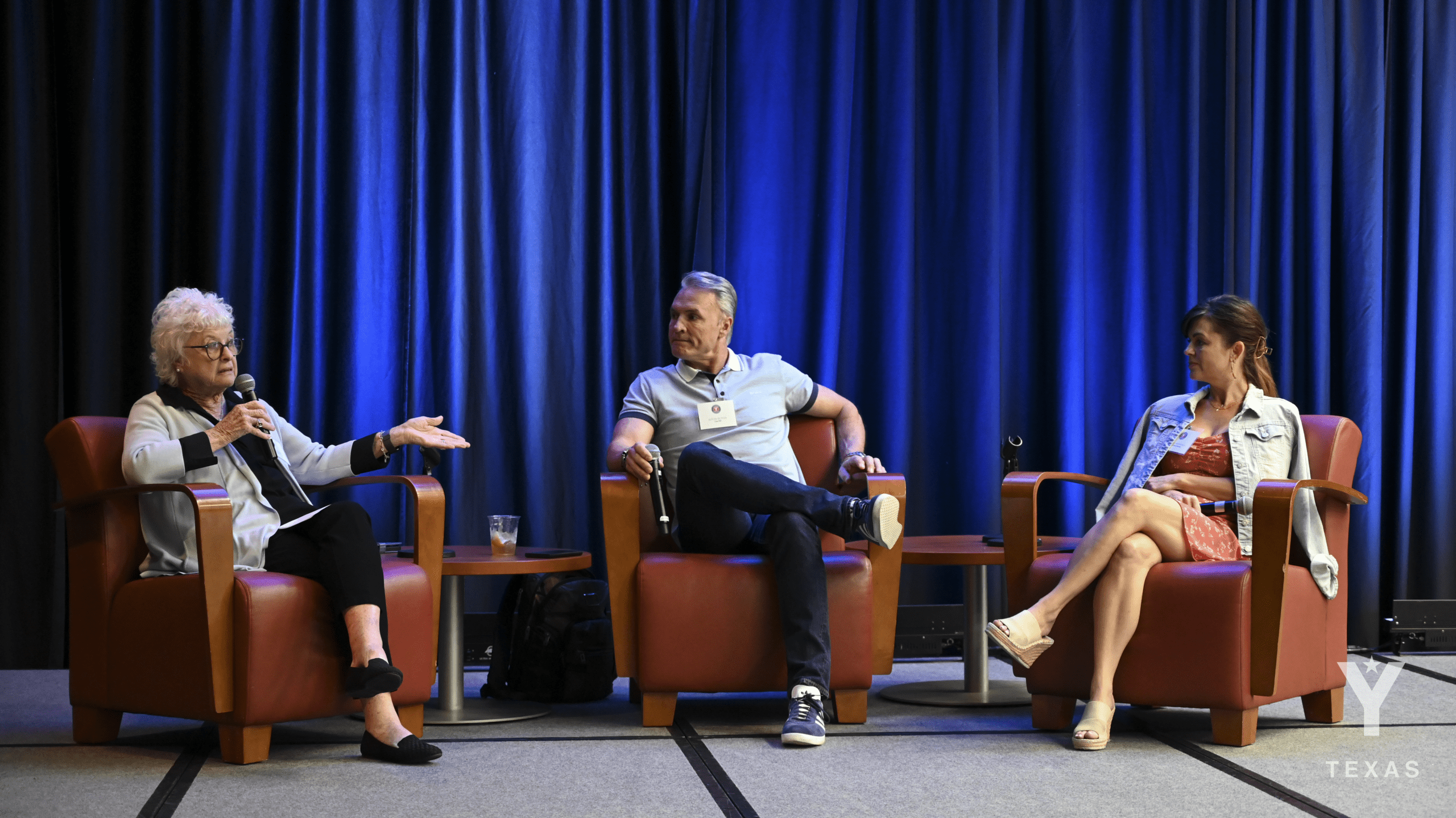
Bastrop County holds a designation from the Texas Legislature as the Film Hospitality Capital of Texas, and the second main stage session made clear why that distinction matters. Moderated by Adena Lewis, Director of Tourism and Economic Development for Bastrop County, the panel featured Alton Butler of Line 204, a major film studio development currently underway in Bastrop, and Mindy Raymond of The Shine Company.
The conversation covered the ecosystem behind the film industry, one that is far larger than the actors and directors most people see on screen. Electricians, carpenters, makeup artists, drivers, hospitality workers, and dozens of other skilled trades are employed on every production. When a film shoots locally, the economic ripple effect is real and immediate. A recent 25-day production in the small town of Round Top spent over $2 million in that community alone.
The biggest news was the passage of a historic $1.5 billion, ten-year film incentive program that was signed into law last legislative session. For years, Texas was losing productions to states like Georgia, Louisiana, and New Mexico because of inconsistent funding. The ten-year program changes that equation entirely. It gives studios, investors, and workers the certainty they need to build infrastructure, move families, and commit to Texas for the long term.
Bastrop County is uniquely positioned to benefit. It is the only county in Texas with a media production zone, and with multiple film studios currently under development, the county is becoming a genuine production hub for the state.
Breakout Session: Powering Texas: Data, Intelligence and Infrastructure
The second roundtable session took a deeper look at the infrastructure powering Texas’s growth, with a focus on data centers, energy, and the digital backbone that modern industry requires. Participants discussed the alignment between state energy policy, local utility partnerships, and the growing demand from AI and cloud computing operations moving into the region.
The conversation reinforced what has become a clear pattern across Central Texas: the most successful infrastructure projects are the ones where state support, county leadership, and private investment are all moving in the same direction at the same time.
Closing Keynote: Why Bastrop? The Case for Texas as the AI Capital of the World
The day closed with the conversation that stopped the room. Evan Pierce with EdgeConneX, a leading global data center developer and operator, joined County Commissioner David Glass for a keynote conversation moderated by YTexas CEO Ed Curtis.
EdgeConneX is currently developing a $1.5 billion, 2.8 million square foot data center campus in Cedar Creek, Bastrop County. It is the largest infrastructure project in the history of the county, with the first 578,000 square foot facility set to open in 2027. When complete, the campus will generate approximately $60 million per year for the Bastrop Independent School District alone.
Commissioner Glass spoke about the generational nature of the opportunity. The county had been collecting $25,000 annually in property taxes on the raw land. Once this first phase is complete, that number climbs to billions in taxable value. He also addressed misconceptions directly, walking the audience through the data on water usage, emissions, and noise, and explaining why the reality is far different from what critics often claim.
The EdgeConneX VP of Development was asked directly why Texas over Virginia, which currently holds the top spot for data center investment in the country. His answer was direct. From the governor’s office to the legislature to the county commissioner’s court, everyone in Texas is aligned on wanting this. They are clearing the road. And the gas resources available in Texas make self-generation possible in a way that most other states simply cannot offer.
He closed with a prediction: Texas will be the AI capital of the world by 2030. Virginia will be left far behind.
Commissioner Glass described the relationship with EdgeConneX as the kind of partnership every county hopes for. They committed to funding nearly half a million dollars in AI-driven curriculum across all four school districts in Bastrop County. They are in talks to help establish a skilled trades campus. And when the community raised concerns, they showed up, answered questions, and met every request without hesitation.
This, Commissioner Glass said, is what generational change looks like.
Post-Event: A Fireside Chat at The Boring Bodega with SpaceX
After the main event, attendees traveled to Hyperloop Plaza in Bastrop, home to The Boring Company and Starlink, for a post-event reception hosted at The Boring Bodega and sponsored by CoStar Group.
The afternoon included a rare fireside chat with Alexandra Noe, Senior Director of Starlink Production at SpaceX. The conversation covered SpaceX’s ambitions, their work on Starlink, and the company’s broader mission to make humanity multiplanetary, including plans for the Moon and Mars. It was a fitting close to a day built around the idea that the most ambitious companies in the world are choosing to build in Texas.
What This Day Represented
The 2026 YTexas Regional in Bastrop was our strongest regional event to date because the conversations were grounded in real decisions, real partnerships, and real stakes. Mayors who govern neighboring cities and genuinely like each other. A county commissioner and a global data center developer who have built something together that neither could have done alone. Film producers who spent years advocating for an industry they believe in. Educators who are rethinking what workforce development looks like in a region growing this fast.
Texas has the ingredients. Bastrop County is proof of what happens when you bring the right people together and let them get to work.
Our next regional event is in Brownsville on April 29. If you are looking for a community where the conversations are this substantive and the connections are this real, we would like to invite you to join the YTexas network. Go to YTexas.com/join